
There has been a growing focus around harmful online spaces dominated by male influencers, often referred to as the “manosphere.” These environments can promote damaging attitudes towards women and girls, normalise non-consensual behaviours (including the creation and sharing of intimate content), and incentivise harmful conduct through online attention and financial gain.
This resource is designed to support professionals, parents and the young people in their care with understanding how these dynamics work, how they are amplified online, and how communities can collectively work to tackle these attitudes.
What is the Manosphere?
The manosphere is a loosely connected network of online communities, influencers, and content creators who often promote rigid or extreme views about masculinity, relationships, and gender roles. While not all content is harmful, a lot of content:
- Portrays women and girls as inferior or deserving of abuse
- Encourages entitlement to attention, relationships, or sexual access
- Dismisses or mocks consent as well as healthy boundaries
- Promotes hostility or toxic behaviour as a form of identity or status
These ideas are often presented in podcasts, live streams or short-form content across some of the most popular social media platforms.
Harmful Behaviours to Be Aware Of
Misogyny and Gender-Based Harm
- Content that degrades or stereotypes women and girls
- Narratives that justify control, harassment, or violence towards women and girls
Non-Consensual Content Sharing and Creation
- Sharing or creating private or intimate images without permission
- Pressuring others to send explicit content
- Treating consent as optional or irrelevant
- Using other people’s identity for financial gain
“Rage Baiting”
- Deliberately posting extreme or offensive opinions to provoke reactions
- Encouraging arguments, outrage, or division to increase visibility and reach
Attacking Those Who Challenge Ideas
- Influencers can often attack, harrass and target those who challenge or debate their ideologies.
- This can develop if influencers encourage their followers to do the same
Why Does This Content Spread So Quickly?
Social media platforms are designed to prioritise content that generates engagement i.e. likes, comments, shares, and watch time. This often means:
- Outrage drives visibility: Content that shocks or angers people often spreads further
- Algorithms amplify extremes: The more people react, the more the content is shown
- Financial incentives exist: Creators may earn money, followers, or influence through high engagement, even if the content is harmful
- Platforms benefit: Platforms will make more money, the more people who stay on their platforms
This creates a cycle where toxic behaviour is not only visible but rewarded.
Fame Through Toxicity
Some influencers present harmful behaviour as a shortcut to success. However:
- Online “fame” built on negativity is often unstable and extremely short-lived
- Harmful content can lead to real-world consequences, including account bans, legal issues, reputational damage and even real-world harm
- It reinforces negative attitudes to women which can develop into the workplace, effect relationships and even families
- It can negatively impact mental health - both for creators and audiences
- It contributes to the assumption that online culture thrives on negativity
True influence and respect are built on authenticity, empathy, and responsibility, not shock value.
How You Can Teach Young People to Respond
Think Critically
- Ask: Why is this content being shared? Who benefits from my reaction?
- Recognise when content is designed to provoke rather than inform
- Recognise that engagement (in whatever form) will fuel reach even further
Don’t Feed the Algorithm
- Avoid liking, sharing, or commenting on harmful content, even to argue a more informed position – it will inadvertently push the content towards more people.
- Use platform tools to mute, block, or report – this will tell your algorithm that you aren’t interested in this type of content.
Question the Behaviours
- Misogyny, racism, antisemitism are all extremely harmful attitudes to hold
- Individuals who carry such beliefs often base their extreme views on misinformation which can create a warped perspective on the world
- Influencers who project these views may not even agree with what they are saying – they just want the engagement.
Challenge Harm Safely
- Encourage young people to challenge harmful attitudes within their peer groups
- Report harmful behaviour through appropriate channels both offline and online
- Encourage young people to speak up in safe spaces, such as at school or youth groups if something concerns them
Find Positive Spaces
- Follow creators and role models who promote respect, inclusivity, and positive values
- Diversify social media feeds to avoid being drawn into harmful echo chambers
Take Breaks
- Being consumed by algorithms that may promote this type of cotent can be exhausting and mentally draining
- Ensure young people take regular breaks away from social media and enjoy offline activities
A Flawed System
Harmful online behaviours linked to the manosphere are often shaped by systems that reward attention no matter the context. It is a flawed system that can often prioritise harm over positive, more informed content through social media feeds.
By understanding these dynamics, young people can challenge what they are seeing, resist being drawn in, make informed decisions, and move towards more positive online communities.
For support on how to manage safe online spaces, harmful content and influencer content, please find more resources from our Online Safety and Social Media Hub and Digital Wellbeing resources.
Alternatively, review guidance from the Department for Education on Misogynistic Myths and further guidance around the Manosphere from the PSHE Association.
Supporting Articles
SWGfL Statement: Increased Accountability from Social Media Firms
30th March 2026
Instagram Releases Alerts for Parents When Teens Search for Self-Harm/ Suicide Terms
23rd March 2026
Interview With Louiza Youlzari: Supporting Workplace Wellbeing Through Coaching
18th March 2026
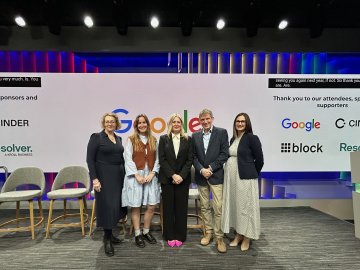
SWGfL Hosts Global Summit in New York to Tackle Intimate Image Abuse in the Age of AI
17th March 2026