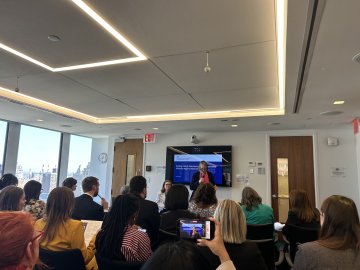
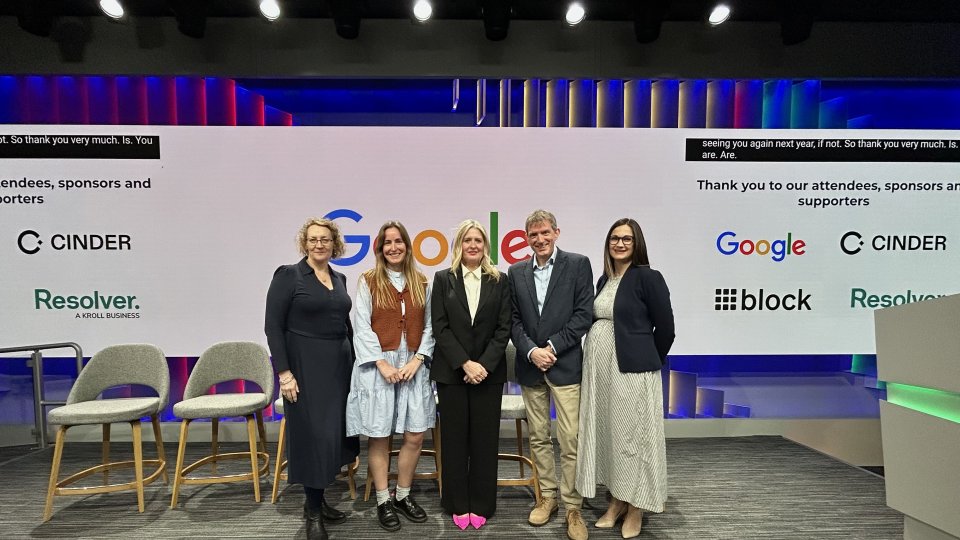
Last week, SWGfL brought together global leaders, policymakers, survivor advocates and technology companies in New York for the annual NCII Global Summit, hosted in partnership with Google. The event marked a significant moment in the international effort to address non-consensual intimate image (NCII) abuse and wider forms of technology-facilitated harm.
The summit ran a number of expert-led panel discussions to explore how the world can respond to rapidly evolving digital threats, particularly those amplified by emerging technologies such as artificial intelligence. Speakers included representatives from Google, Meta, Ending Violence Against Women and Girls, NotYourPorn, CyberTipLine, The Tech Coalition, Depop, SafetyKit, Cyber Civil Rights Initiative, Sanctuary for Families as well as leading academics and representatives from Government.
A Global Conversation Around NCII
Non-consensual intimate image abuse continues to affect people across the world, with the scale and complexity of the issue increasing as digital platforms evolve. The summit brought together leading voices to examine how societies can respond collectively. Participants shared insights into the changing nature of online abuse and the urgent need for coordinated solutions.
Discussions emphasised that while NCII is not a new issue, the speed, scale and sophistication of technology, including the rise of synthetic media and AI-generated imagery, means responses must continue to evolve.
Prioritising Survivor Voices
A key theme throughout the summit was the importance of ensuring that survivor voices shape policy, technology and support services. Speakers highlighted how survivor advocates have played a crucial role in informing frameworks, legal reforms and platform responses. Their lived experience provides invaluable insight into the barriers people face when seeking justice, reporting abuse or accessing support.
Participants emphasised that effective solutions must be survivor-centred, recognising the different circumstances, inequalities and structural challenges individuals may face when experiencing intimate image abuse. Ensuring that survivors are not only heard but recognised as experts was highlighted as essential in building systems that truly meet their needs.
Strengthening Global Policy and Legal Frameworks
Another focus of the summit was the role of governments in creating robust legal and policy frameworks to address technology-facilitated abuse. Delegates shared examples of how countries are strengthening legislation to criminalise the non-consensual sharing of intimate images and improve protections for victims. Political leadership, sustained funding and cross-government cooperation were identified as key ingredients in delivering meaningful progress.
Reinforcing survivor-centred measures, Minister Alex Davies-Jones attended the summit to highlight the UK Government’s commitment to tackling non-consensual intimate image abuse, including the introduction of vital takedown measures announced by the Prime Minister on February 19th. Speaking during a panel session, Minister Davies-Jones said:
“I am really proud that we've announced our takedown measures. So if you report an intimate image of you on a social media platform, we will be introducing a criminal law that says that the platform has to remove it within forty-eight hours, and if they don't, then Ofcom, as our independent regulator, will be able to fine the platform up to ten percent of their global annual revenue .... We will also have the power to block the platform and the service from the United Kingdom, and we will not hesitate to do that.”
Speakers also discussed how national strategies are increasingly addressing digital violence alongside broader gender-based violence policies. Initiatives such as national action plans, education programmes and public awareness campaigns are helping to tackle the issue from multiple angles.
However, participants acknowledged that legislation alone cannot solve the problem. Effective responses require collaboration between policymakers, platforms, civil society and support organisations.
The Role of Technology Platforms
Discussions explored how platform design, moderation systems and reporting processes influence the spread and persistence of harmful content. As digital platforms continue to evolve, the responsibility to build safety into systems from the outset is becoming increasingly important.
Regulatory developments in regions such as the European Union were highlighted as examples of how policy can help shift incentives across the digital ecosystem, encouraging companies to compete not only on innovation, but also on safety, trust and accountability. The summit reinforced the importance of industry collaboration in developing new tools and approaches that prevent the circulation of intimate images without consent.
Towards a Model National Framework
One of the central areas of discussion was the development of a Model National Framework for addressing NCII. The framework aims to provide guidance for governments seeking to strengthen their response to intimate image abuse. Rather than prescribing a single legislative model, the framework focuses on shared principles and outcomes that can be adapted to different national contexts.
These principles include survivor-centred approaches, human rights protections, coordinated institutional responses and clear responsibilities for both states and platforms. By grounding guidance in universal human rights standards while allowing flexibility for different legal systems, the framework seeks to support governments around the world in building stronger responses to online abuse.
International collaboration, involving governments, UN agencies, civil society organisations and industry, has been essential in shaping this work and our preliminary blueprint is now available for download.
David Wright CBE, CEO of SWGfL ‘’Hosting the summit in New York was an important milestone in our ongoing fight against intimate image abuse. By bringing together partners and experts from across the world, the event strengthened the growing global commitment to ensure protections are strengthened. While the challenges remain complex, the conversations throughout the summit reflected the shared belief that meaningful progress is possible when everyone works together. It was a privilege to sit with such inspiring voices. SWGfL will continue to host opportunities where we can bring everyone together to work towards positive change.’'