Ofcom has published a rapid assessment examining how social media services could reliably determine whether users are aged 16 or over. This has been published ahead of the UK Government setting out the detailed rules for its proposed ban on under-16s using social media platforms. The report identifies four age assurance methods that could be considered "highly effective" for verifying that a user is aged 16 or over: photo ID matching, digital ID services, banking-based checks, and facial age estimation.
We welcome the speed with which Ofcom has responded and the greater clarity the report provides around what "highly effective" age assurance looks like in practice. As discussions continue around how the proposed social media restrictions will be implemented, it is important that Ofcom continues to clarify their plans as the proposed measures draw closer.
Greater Clarity on Age Assurance
Age assurance has become a central part of conversations around children's online safety. While there has been growing agreement that platforms should take stronger steps to understand the age of their users, there has often been less certainty around what constitutes an effective solution.
As Ofcom have now identified the specific methods capable of delivering age checks for 16 year olds, it has helped clarify how restrictions would be put into practice. The regulator's focus on accuracy and privacy provides a useful framework for both industry and government as they consider the next stages of implementation.
Age Assurance is Not the Whole Answer
While effective age checks will play an important role in restricting underage access to certain services, age assurance should not be viewed as a standalone solution.
Children's online experiences are shaped by the design of the platforms they use, the content they encounter and the systems that recommend and promote that content. Restricting access for younger users may reduce exposure to certain risks, but it does not remove the need for platforms to actively design safer online spaces.
For this reason, we continue to encourage policymakers to place equal emphasis on safety by design principles. Services should be built with children's wellbeing in mind from the outset, reducing opportunities for harm rather than relying solely on age checks to prevent access.
Safety by Design Must Remain the Priority
The proposed social media ban has inevitably focused public attention on age verification technologies. However, the most significant opportunity to improve online safety still lies in ensuring platforms are designed to protect users by default.
A safer internet requires robust moderation, age-appropriate experiences, safer recommendation systems, privacy protections and clearer reporting processes. Age assurance may help determine who can access a service, but safety by design helps determine what happens once a person is there.
As implementation plans develop, we hope the conversation remains focused not simply on who can access platforms, but on making those platforms safer for everyone.
A Whole-System Approach
One particularly encouraging aspect of Ofcom's work is its recognition that responsibility for children's online safety should not rest solely with social media companies. The report highlights the potential role of app stores, alongside wider industry innovation at operating system and device level, as part of a layered approach to protection.
We strongly support this whole-system approach. App stores are often a primary route through which young people access online services, and greater use of age assurance at this level could provide an additional layer of protection. However, no single solution will be sufficient on its own. Effective safeguarding requires collaboration across the board.
Parents Need Guidance
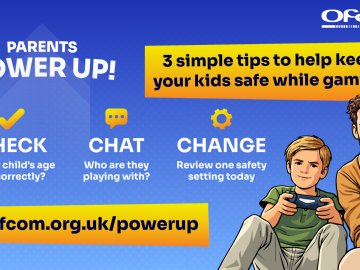
Alongside industry and regulatory measures, parents continue to play a crucial role in supporting children online.
Many platforms already offer parental controls and safety features, but it can be fragmented, inconsistent and difficult to navigate. Different services provide different controls, settings and user experiences, making it unnecessary complex for families.
As new age assurance measures are introduced, we hope platforms will take the opportunity to streamline parental tools, improve accessibility and provide clearer guidance on how parents can use these features effectively. Better parental support should sit alongside age assurance and safety-by-design measures as part of a broader child safety strategy.
Further Details Expected
The UK Government is expected to publish further details on how the proposed under-16 social media ban will operate before the end of 2026, with Ofcom subsequently consulting on guidance for industry and preparing to oversee compliance.
The publication of this rapid assessment is an important step forward. Effective age assurance will undoubtedly have a role to play in protecting children online, and greater clarity around expected standards is welcome. However, lasting improvements in children's safety will depend on a broader, approach that combines age assurance, safety by design, platform accountability, parental support and collaboration.