According to Ofcom's latest Growing Up Gaming report, nearly nine in ten children aged 3-17 (88%) play games on a device, making gaming one of the most popular activities for young people. At the same time, more than half (55%) of children who game online say they play with people they have never met in person, while one in five (20%) do so all or most of the time.
It's therefore unsurprising that parents identify communication with strangers as their biggest online gaming concern. Almost two-thirds (64%) of parents say they are worried about their child talking to strangers through games and gaming chat functions. This ranks higher than concerns around bullying (60%), inappropriate content (59%) and pressure to make in-game purchases (51%).
A Gap Between Concerns and Actions
One of the most notable findings from Ofcom's research is the disconnect between parental concerns and the rules families set around gaming. While talking to strangers is the number one concern, fewer than half of parents (43%) have rules about who their child can play with online. By comparison, more parents focus on time limits (56%), when gaming can take place (51%) and appropriate content (50%).
Gaming Is Social by Design
Many of today's most popular games are built around communication and shared experiences. For children, these interactions can foster friendships, digital skills and a sense of belonging.
However, the social side of gaming also means young people may encounter situations that require support. It’s important to recognise that children won't always recognise risky interactions, inappropriate behaviour or manipulative tactics from other players. That's why trusted adults play such a crucial role.
The research reinforces that safety features and platform responsibilities matter, but regular conversations between children and the adults who care for them are essential for safer gaming experiences.
Talking About Gaming
When adults understand the games young people enjoy, who they play with and what communities they are involved in, it becomes much easier to spot concerns and provide support when needed.
Conversations about gaming do not need to be formal or focused solely on risk. In fact, the most effective discussions often start with curiosity:
- What games are you enjoying at the moment?
- Who do you usually play with?
- What do you like most about that game?
- Have you ever experienced anything that made you feel uncomfortable online?
- Do you know how to block, mute or report other players?
By creating open communication, children are more likely to seek help if something does go wrong.
Check, Chat, Change
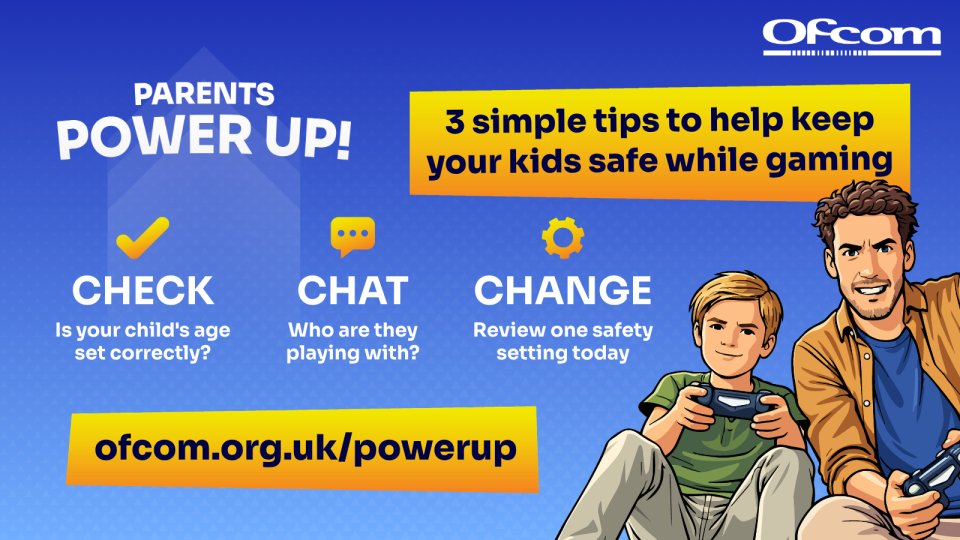
To support this, Ofcom has launched a pilot campaign called Power Up, encouraging parents to adopt three simple actions: Check, Chat and Change.
- Check the safety settings on games and devices, including privacy controls, communication settings and age-appropriate restrictions.
- Chat regularly about gaming experiences, friendships and any concerns children may have.
- Change settings or family agreements when needed, whether that's limiting contact from unknown players, enabling additional safety tools or reviewing spending controls.
As part of Power Up there are challenges and family activities that young people can get involved with new resources launching later this month.
Gaming Hub
Children deserve opportunities to enjoy all the benefits gaming can offer while remaining safe and supported. That balance is achieved not through restriction alone, but through trust, communication and shared understanding.
For parents and carers looking for practical guidance, SWGfL's Gaming Hub also provides expert advice on popular platforms, safety settings, online interactions, in-game spending, reporting tools and how to start meaningful conversations about gaming.
Visit the SWGfL Gaming Hub for resources, guidance and support to help young people enjoy safer, more positive gaming experiences.